
Expected Speakers for BICA 2026
The following speakers shape the flow of BICA 2026 presentations.
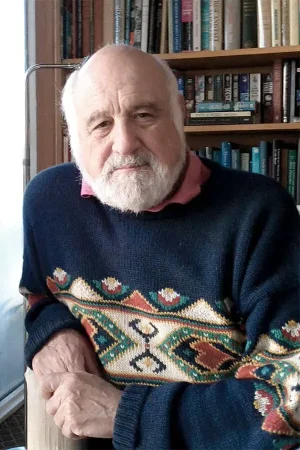
Michael Arbib
Professor Emeritus at USC. San Diego, California
Michael Arbib’s primary research focus is on the coordination of perception and action. This is tackled at two levels: via schema theory, which is applicable both in top-down analyses of brain function and human cognition as well as in studies of machine vision and robotics; and through the detailed analysis of neural networks, working closely with the experimental findings of neuroscientists on humans and monkeys. He is also engaged in research on the evolution of brain mechanisms for human language, pursuing the Mirror System Hypothesis that links language parity (the fact that what the speaker intends is roughly what the hearer understands) to the properties of the mirror system for grasping — neurons active for both the execution and observation of actions — to explain (amongst many other things) why human brains can acquire sign language as readily as speech.
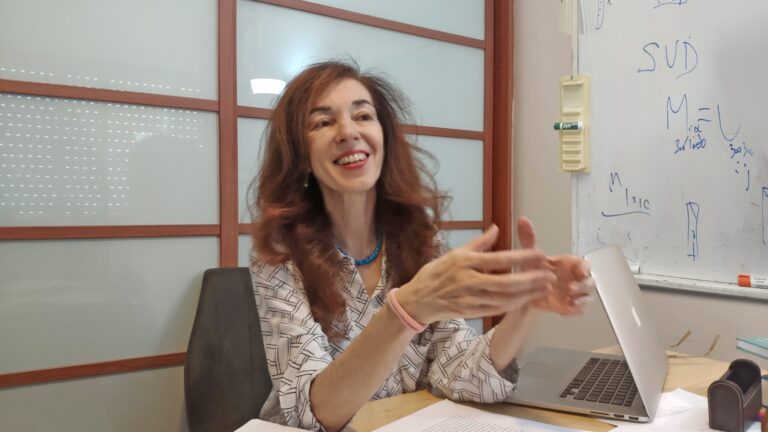
Hava Siegelmann
Professor of Computer Science, and Brain Sciences
Hava Siegelmann is a computer scientist and leading researcher in neural computation and biologically inspired artificial intelligence. She earned her Ph.D. in Computer Science from Rutgers University and is widely recognized for her foundational work on analog neural networks and computation beyond the Turing limit. Her research spans lifelong learning, continual learning in neural networks, computational complexity of dynamical systems, and brain-inspired AI models.
She previously served as Director of AI Programs at DARPA, where she led major initiatives including Lifelong Learning Machines, AI robustness against
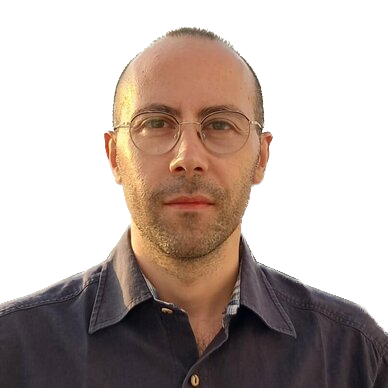
Antonio Lieto
Associate Professor, Computer Science, University of Salerno
Antonio Lieto’s research focuses on Artificial Intelligence, Computational Cognitive Science, and Human–Machine Interaction, with emphasis on knowledge representation, semantic technologies, and cognitive architectures. His work centers on developing intelligent systems that integrate cognitive models with AI to support adaptive and interactive technologies.
He leads the Cognition, Interaction and Intelligent Technologies Laboratory (CIIT Lab) at the University of Salerno and collaborates with the Cognitive Systems for Robotics Lab at the ICAR-CNR Institute. He is currently Associate Editor of Cognitive Systems Research and has held prominent roles in the scientific community, including Vice-President of the Italian Association of Cognitive Sciences (AISC), member of the Scientific Board of the Italian Association for Artificial Intelligence (AI*IA), and former Deputy Editor-in-Chief of JETAI. He is also affiliated with interdisciplinary research centers such as LLC and CIRMA.

Jan Treur
Professor Emeritus, Faculty of Science, Computer Science
Jan Treur is a Full Professor of Artificial Intelligence at Vrije Universiteit Amsterdam and an internationally recognized expert in multidisciplinary human-like AI modeling. Since 1990, he has published more than 700 widely cited papers on cognitive, affective, and social modeling, supervised over 40 Ph.D. students, and authored and edited several books on adaptive and network-oriented AI modeling and its cross-disciplinary applications.
In recent years, his work has focused on modeling higher-order adaptive processes using self-modeling network models, particularly internal mental models, simulation-based reasoning, and organizational learning. Notable recent projects include a Springer Nature book on computational modeling of multilevel organizational learning (2022/2023) and ongoing research (2023–present) on shared mental models to promote just safety cultures in hospitals, as well as studies on intrapersonal synchrony and adaptive bonding emerging from human interaction.

Igor Pivovarov
Artificial intelligence researcher, analyst & community organizer
Igor Pivovarov is an artificial intelligence researcher and serial entrepreneur with more than 25 years of experience in technology commercialization. Trained as a physicist, he has 7 years of scientific research experience in biophysics, mathematical modeling, machine learning, and neural networks, along with 9 years in R&D as a software engineer, electronic designer, product designer, and head of R&D. He also brings 20 years of business experience—including 6 years in Europe—as CEO and marketing leader, has raised approximately $25 million in investments and non-dilutive funding, and has founded or co-founded 10 technology startups.
Currently, he serves as Chief Analyst at the MIPT Center of Artificial Intelligence, Strategic AI Advisor at Huawei, CEO of IP Laboratories, and Director of OpenTalks.AI. His most recent projects include leading OpenTalks.AI, one of the major AI conferences in Russia, and publishing the Almanac Artificial Intelligence, a regular public report on the AI industry in Russia and worldwide.